Cheeky Heating, Cooling & Plumbing Blog: Archive for the ‘Plumbing’ Category

Drain Cleaning Tips from the Pros

Monday, June 15th, 2020
bubbling-drain

The number one tip we will always share when it comes to drain cleaning is, “don’t use chemical store-bought drain cleaner!” It’s never a good idea.

Look, we get it, a clogged drain is one of those problems that you expect you can resolve easily. Just pour some liquid down there and voila! The clog is gone. But that’s not quite how it works. Clogs can be insidious in the sense that even though you can get rid of them for a while, they just come back. That is, if you aren’t using the right drain cleaning practices.

When you hear the term “plumbing problem” you probably think of water flooding the floors, or a persistent drip coming from one of your faucets that you just can’t seem to repair. These are, of course, certainly worth a call to a plumber in their own right, but so too is a clogged or backed up drain.

Continue Reading

How to Best Prevent Clogged Drains

Monday, January 13th, 2020
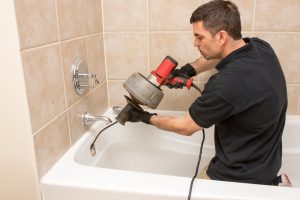
plumber-using-drain-snake

Do you have your drains routinely cleaned? If not, you should be! Our plumbers will come to your home and use the best in currently technology, such as hydro-jetting technology, to comprehensively clean out the drainpipes throughout your home. This removes the buildup that leads to frequent slow drains and clogs, and also helps prevent pipes from suffering other damage as well.

“But wait,” you might be wondering, “can’t I just use liquid drain cleaner I bought at the store to treat clogs?”

You can, but this would only provide a temporary solution to the problem, and these drain cleaning chemicals are so caustic that they could be harmful to you and are definitely—perhaps even ironically—harmful to your pipes. The corrosive chemicals cause corrosion, leading to premature pipe replacement. The best thing to do is invest in routine drain cleaning, and also to know how to prevent clogs from forming to begin with, which we’ve delved into below.

Continue Reading

7 Ideas To Save On Your Water Bill (And Use Less Water)

Monday, December 2nd, 2019

You already know how important it is that we all try to reduce our use of water. Our planet’s future depends on it! And, there are so many practical and surprisingly easy ways for us to do that.

So, here are seven really practical ways for you to conserve water in your home…

1. Monitor your water bills

Check your water bill each month and if it goes up try to figure out if there’s a good reason (filling the swimming pool). If it spikes and you don’t know why, you probably have a leak somewhere.

Seriously, the average home wastes more than 10,000 gallons of water a year from easily fixable plumbing leaks. It’s worth it to bring in a plumber if you suspect you have a leak but cannot find it.

2. Use the water meter to check for hidden water leaks

Go read your water meter and write down the number. Stop using water for two hours. Then go back to the meter. If it’s not at the exact same number, there’s a water leak in your house. If you can’t find it, call your home services company to send out a plumber.

3. Use every drop

Find ways to repurpose water so it doesn’t just go down the drain. For example, when you boil potatoes or pasta, pour that water through a colander and into another pot to capture the hot water. After it’s cooled, this water can be used for your household plants. You can do something similar whenever you run the tap and wait for hot water.

4. Use your dishwasher more

You might be surprised, but as it turns out washing dishes by hand uses a lot more water than running the dishwasher, and even more so if you have a newer more water-efficient model. Newer dishwashers will also adjust to use less water for smaller loads. (If you don’t have a newer dishwasher, see #7.)

5. Run full loads in your washing machine

You can adjust water levels to match the size of your load, but it’s even more water-efficient to run larger loads in your washing machine.

6. Cover your swimming pool

It takes a lot of water to fill your swimming pool and to keep it filled. In the summer sun, pools can lose an inch or more of water each week to evaporation. Getting a cover for your pool can save thousands of gallons of water each season. Make it a solar blanket and you can also reduce your heating cost. But this only works if you’re diligent about covering the pool when it’s not in use.

7. Install a new dishwasher

Newer dishwashers use as little as four to seven gallons per load—again that’s a lot less than washing by hand and much less than older dishwashers.

Summary

If we all work on conserving water, we can make a big difference. While taking these practical steps, be sure to contact a home services company if you need help finding a water leak or installing a new dishwasher.

Continue Reading

Is Your Sump Pump in Good Shape?

Monday, November 18th, 2019
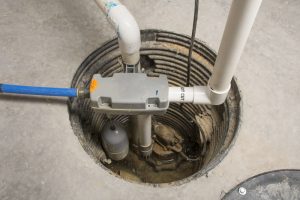
sump-pump-system

There are some parts of the country where homeowners have never even heard the term “sump pump” let alone do they know what it is. They don’t need to know, after all—their home may be in a position where flooding is just not a concern.

Unfortunately, we’re not in that part of the country! Sump pumps are common in our area, and very often necessary. Winter and spring are times for heavy rains, and then as we get later in the year we also have tropical storm conditions to contend with—that can send floodwaters right into your home.

The question is, is your sump pump in good condition to handle this?

Continue Reading

7 Easy Ways for You to Start Saving on Your Water Consumption

Friday, October 18th, 2019

In America we’re used to have running water readily available and in seemingly endless supply, but the long-running drought in California and water restrictions in western states should tell us otherwise. There is a finite supply of water and though water is a renewable resource the amount of clean drinking water is declining. We can all help out by using less water (and paying less). These seven ways to conserve water at home are very practical and some are surprisingly easy.

1. Turn off faucets

How often do you let faucet water run needlessly as you wash or rinse dishes, wash your hands or face, brush your teeth or shave? Your bathroom faucet runs at about two gallons of water per minute. Turn off that tap while you brush your teeth and shave, and you’ll save hundreds of gallons a month.

2. Shorten showers

An older showerhead can put out as much as 5 gallons of water per minute. Install a new low-flow showerhead to bring that down to 2.5 gallons and then cut your shower time in half and you will have reduced your shower water use by 75 percent!

3. Fix leaks

Even a slow drip from a leaking faucet can waste as much as 20 gallons of water a day. A leaking toilet can waste 200 gallons a day! (To check your toilet for a leak, put several drops of food coloring in the tank. If that color shows up in the bowl without flushing, you have a leak.)

4. Go to a car wash

Instead of washing your car at home with the hose, go to a gas station car wash that will use less water and recycle it.

5. Install low-flow or dual-flush toilet

Replace an old toilet with a new ultra-low volume (ULV) 1.6 gallon flush toilet to use up to 70 percent less water. That could reduce your total indoor water use by 30 percent! Another option is a dual-flush toilet that could use as little as 1 gallon for the low-level flush.

6. Replace your old water heater with a tankless hot water heater

A tankless water heater only heats water when you need it. And when you need hot water, the supply is ongoing… so no more worrying about being the last one to take a morning shower. You’ll save about $80 a year in water heating bills.

7. Upgrade to a High Efficiency (HE) washing machine

Today HE washing machines use as little as 7 gallons per load. That’s a lot less than your old washing machine that could be using up to 54 gallons! Newer Energy Star-rated washers use less water and 50 percent less energy.

Summary

None of these are particularly hard to do, but act on a few of them (or all of them) and you could conserve a lot of water—and lower your monthly bills. Some of these are do-it-yourself projects, but a home services company could help you with any of these projects that require a professional

Continue Reading

Are Frozen Pipes a Risk?

Monday, October 7th, 2019
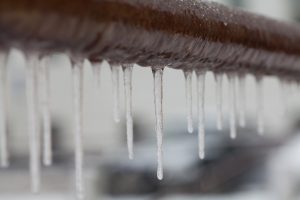
icicles-hanging-from-brown-pipe

“Wait,” you may be wondering, “it was in the 90’s still last week, why are we talking about this?”

We get it, fall has barely started, and it’s rather rare that temperatures in the Woodstock area drop below 30°F in the winter anyway. But, rare doesn’t mean never, and it’s far better to be prepared for the possibility than not. How can you do this? Read on!

Continue Reading